
Ages 14–17 · Classic poetry collection
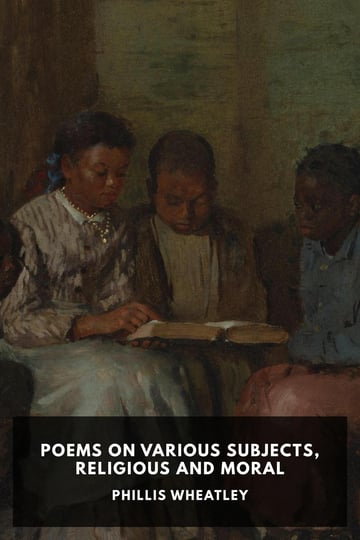
Poems on Various Subjects, Religious and Moral
A collection of poems by Phillis Wheatley addresses faith, mourning, nature, imagination, public figures, and artistic creation. Biblical and classical narratives appear alongside personal reflections on Africa, captivity, and freedom.
Free to read on Literal Kings for readers in the United States. This edition is public domain in the U.S. and may still be under copyright elsewhere.
You'll create a free profile first, then the book opens in your library.
Our review
Age guidance
Literal Kings full-text editorial review: PASS for 14–17 because the collection offers substantial Black literary agency and serious engagement with faith, captivity, and freedom, with specific historical and violence notes. It does not pass 11–13: the extended graphic killings in Goliath and Niobe, a suicide, repeated child bereavement, and demanding classical theology make the whole collection unsuitable for that band. The overall stance does not endorse contempt for Black people, although its Christian hierarchy and descriptions of Africa must be acknowledged rather than explained away. This judgment covers the complete supplied file; the Boston men’s attestation is absent and has not been reviewed.
Content notes
Preface and Letter to the Publisher: enslavement and purchase of a child, paternalistic authentication of her learning; the separate Boston men’s attestation is absent. To Maecenas and To S. M.: African literary and artistic achievement. On Being Brought from Africa to America: one quoted racist assertion associating Black color with evil, explicitly challenged; one historical racial group designation, Cain imagery, and conversion/refinement language; no N-word. To the University of Cambridge: Africa described as religious error and darkness, crucifixion and damnation. Dartmouth: forcible child removal and parents’ anguish, explicit opposition to tyranny. Frame these together: Wheatley asserts African humanity and liberty while valuing Christian conversion; kidnapping and enslavement are not benefits, and the text’s religious hierarchy is real. Goliath of Gath: animal killings, shattered brain, beheading, gushing blood and mass slaughter celebrated as biblical victory. Isaiah 63:1–8: divine vengeance, dying troops and blood/winepress imagery. Niobe: prolonged killing of children with arrows, exposed entrails, father’s suicide by stabbing his chest, mother’s wish to die and petrification; divine punishment for pride with sympathy for grief. Elegies including the five-year-old girl, C. E., J. C., Three Relations and Marshall: repeated child/adult death, heavenly reunion, injunctions to stop grieving; Marshall includes hair-tearing and nonsexual pregnancy references. Hurricane: shipwreck and near drowning. Amory rejects atheism; Christian salvation, sin and judgment pervade the collection alongside classical gods. King, Captain, Rebus/Answer praise monarchy, warfare or imperial conquest. No explicit sex, recreational substance use, gambling or conversational profanity.