
In the library now
4 books for ages 11–13
Every book here is free to read and download on Literal Kings with a profile. Classics marked “U.S. readers only” are public domain in the United States and are available only to readers there.
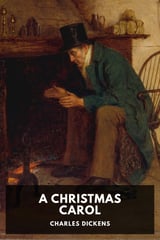
A Christmas Carol
On Christmas Eve, the miser Ebenezer Scrooge receives a warning from his dead business partner and visits from three spirits. Their visions of past, present and possible future confront him with the consequences of his choices.
Age guidance. Literal Kings full-text editorial review: PASS for 11–13 and 14–17 because its non-graphic supernatural terrors and bereavement serve a clear, compassionate moral narrative. Younger readers need notes on death anxiety, Victorian poverty, dated disability language and playful but intrusive courtship. Teens can engage independently with its social criticism, narrative irony and ethical transformation; challenging prose may require support for either band.
Content notes. Stave I: Marley is dead; his chained ghost screams and its jaw falls to its chest, with other tormented spirits outside; Scrooge imagines boiling Christmas celebrants and threatens a caroller with a ruler, while his wish that poor people die is condemned. Stave II: childhood neglect, a sister’s death, mistreated servants and broken engagement; the narrator admires a young woman’s lips and waist, without explicit sexual detail; wine is served to children and beer/negus at a party. Stave III: Tiny Tim’s possible death, disturbing emaciated allegorical children, Christian worship/healing references, family gin toasts, brandy pudding, grog and wine; flirtatious cornering and touching during blind man’s buff is treated as comedy and invites discussion of consent. Stave IV: prolonged non-gory death dread, theft of burial clothes from a corpse, implied interest of rats, Scrooge’s grave and Tiny Tim’s death in a possible future, including his father kissing his face; snuff, pipe smoking and drunkenness. Stave V: comic physical poking and imagined restraint, proposed alcoholic punch, reconciliation and Tiny Tim’s survival. Zero racial slurs in each of Staves I–V; dated disability/mental-health language and mild euphemistic or implied swearing occur, but no explicit sex, suicide or depicted animal torture.
From Standard Ebooks · Public domain in the United States · U.S. readers only
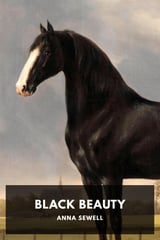
Black Beauty
A horse named Black Beauty tells his own life story, from a gentle start in the English countryside through kind and cruel owners, hard work as a London cab horse and, finally, a safe home. The novel argues for humane treatment of animals and of the working people who care for them. This is a classic English animal story, not a story about Black characters or history; “Black” is the horse’s colour.
Age guidance. Literal Kings editorial suitability after full-text review of all 49 chapters, not a publisher age claim. Suitable for ages 11–13 with context and advance warning that this is a story of sustained animal suffering, not a gentle pony story; its humane advocacy, criticism of exploitation and restorative ending support discussion. Not recommended for ages 8–10 because of battlefield injuries, Ginger’s fate and Beauty’s near-fatal collapse (chapters 34, 40, 47).
Content notes. The horse’s coat-based nickname “Darkie” (chapters 1, 4) is also a racial slur, and chapter 9 contrasts “drovers or gypsies” with “young gentlemen”, an anti-Romani stereotype; both are presented as historical language to challenge. Animal and human death: a hunt with a dead hare, a rider’s death and a horse shot (2), a fatal stable fire (16), a drunken rider’s bloody death and his family sent to the workhouse (25–26), battlefield suffering (34), Ginger’s wish for death and her body (40), and Beauty’s abusive overwork and collapse (47). Also: alcohol dependence, dated disability and class language, Christian and temperance moralising (35–36, 44), and a hooked-nosed villain description (47) that may echo antisemitic caricature.
From Standard Ebooks · Public domain in the United States · U.S. readers only

Kari the Elephant
An Indian boy raises Kari the elephant and travels with him and the monkey Kopee through villages, Benares, and the jungle. Rescues, a tiger hunt, quicksand, and a forest fire precede a lumber-yard disaster that separates the boy from Kari.
Age guidance. Literal Kings editorial suitability after full-text review, not a publisher age claim: suitable for ages 11–13 with warnings about violence and loss, and with historical, cultural and animal-science framing. The episodic adventure and capable boy lead support engagement, but ornate prose, archaic dialogue and spiritual abstraction need confident readers. Not recommended for ages 8–10: repeated animal deaths, a point-blank tiger shooting, a human trampling death, cruelty by drunken men and unresolved loss are too sustained for that band.
Content notes. I: drowning, whipping, retaliatory near-drowning. II: bleeding trunk. III–IV: two dogs killed; baby abduction recalled. V: cobra crushed after prolonged agony. VI: elephant goring and mate-as-prize imagery. VII: human deaths reported, birds shot, tiger shot in ear with blood on boy’s face, then skinned. VIII: near-suffocation in quicksand. IX: forest fire and bird deaths. X: two drunken engineers torment chained Kari with lit matches; fire, fatal human trampling, bull killed, destruction, permanent separation. Animal lore and rescue methods are not reliable science or safety guidance.
From Project Gutenberg · Public domain in the United States · U.S. readers only
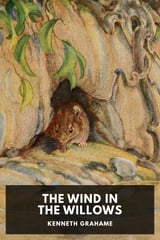
The Wind in the Willows
Mole leaves spring cleaning behind for life on the river with Water Rat, wise Badger and the rich, reckless Toad. Their adventures test friendship, loyalty and responsibility, from the frightening Wild Wood to the fight to win back Toad Hall.
Age guidance. Literal Kings full-text editorial review (all 12 chapters, read in two halves by two reviewers): PASS for 8–10 as shared or supported reading and for 11–13 with chapter notes. Peril is repeatedly resolved, violence is brief, comic and non-graphic, and friendship, gratitude and restitution carry the story; the lyrical, period vocabulary is a real barrier for independent 8–10 readers. Not offered for 6–7 because of the sustained Wild Wood fear, gunfire and fight scenes and the language level.
Content notes. Ch. I: boat capsizes, near-drowning and rescue. II: a speeding car wrecks the caravan, no injuries; one dated Roma-associated term for a caravan. III: prolonged fear in the snowy Wild Wood; rescue with pistols and cudgel (not fired); minor cut. IV: Toad's car crashes and hospital stays reported; Otter cuffs a rabbit. V: beer and mulled ale given to young carol singers; a Christian Nativity carol. VI: Toad is restrained by friends, steals a car, drives dangerously, and is sentenced to twenty years with chains and a dungeon (comic). VII: the mystical Piper (Pan) episode. VIII: prison despair; Toad escapes disguised as a washerwoman, who is tied up by agreement; armed railway chase. IX: Rat is gripped by a trance-like urge to sail away and is restrained and comforted; wine. X: Toad is thrown in a canal, steals and sells a horse to a traveller described with a dated Roma-associated label, crashes a car, nearly drowns. XI: reported beating of Toad's friends, a gunshot narrowly misses Toad, revenge planning. XII: night attack through a tunnel, an accidental near-shooting, brief non-graphic blows, prisoners made to clean and then released. Pipe smoking throughout. No sex, no deaths, no racial slurs.
From Standard Ebooks · Public domain in the United States · U.S. readers only
Start reading